Something's been keeping you up?
Are you sleeping as well as you thought, or is there a sleep monster disturbing your rest?
You may have sleep apnea without knowing it.
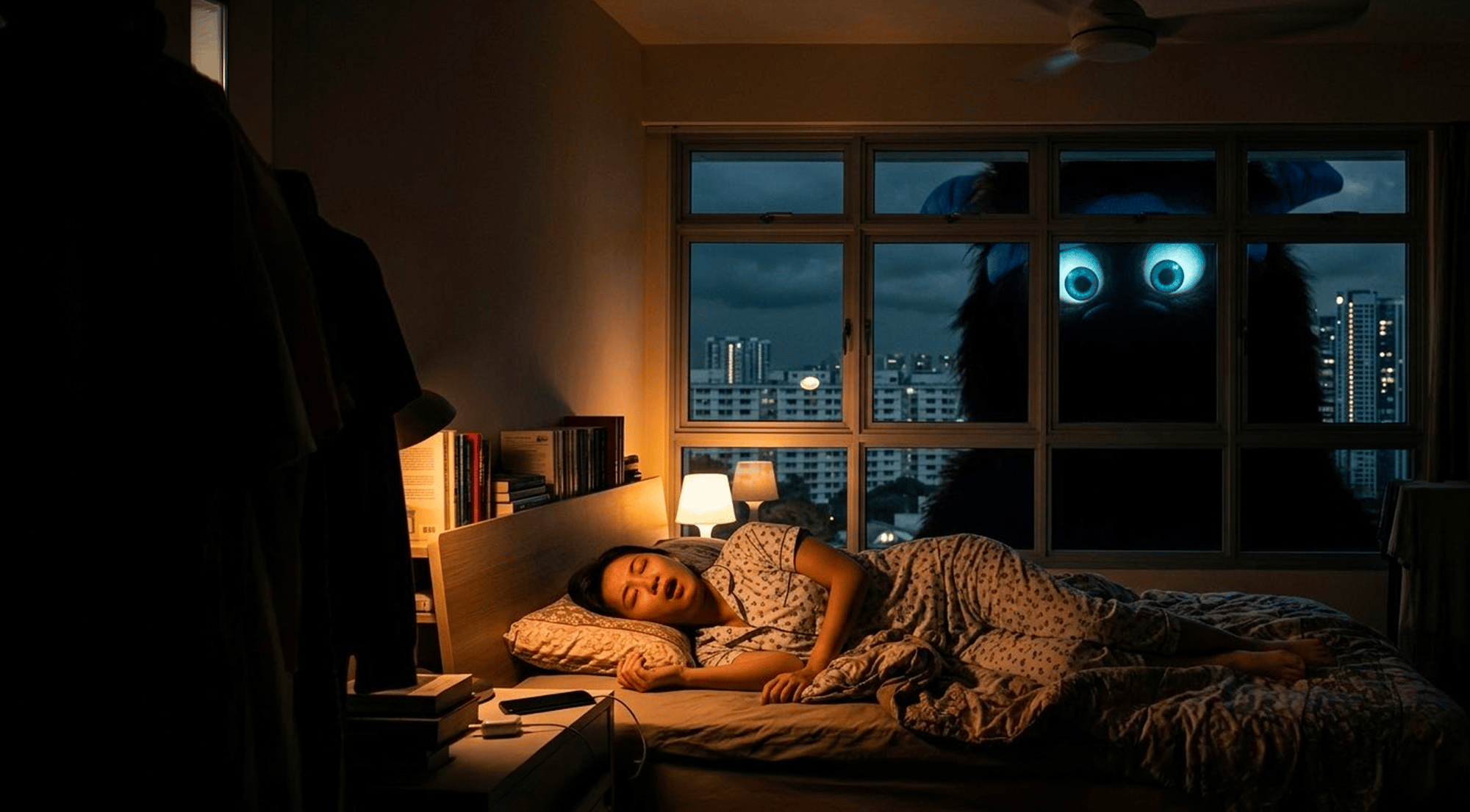
Are you really sleeping well?
It may be more common than you think

Nearly 1 billion in the world has a sleep problem, yet up to 80% of them are unaware.1
Most people don't realise they have it.
One Singapore study found that 91% of people identified with moderate-to-severe sleep-disordered breathing were previously undiagnosed.2
Recognising the signs is becoming easier
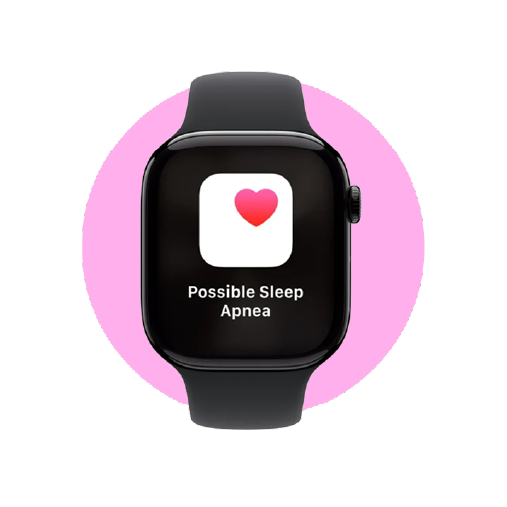
Selected Apple and Samsung watches have features that may detect signs of moderate-to-severe sleep apnea. These features do not provide a diagnosis.3,4
Sleep apnea is linked to other health risks.
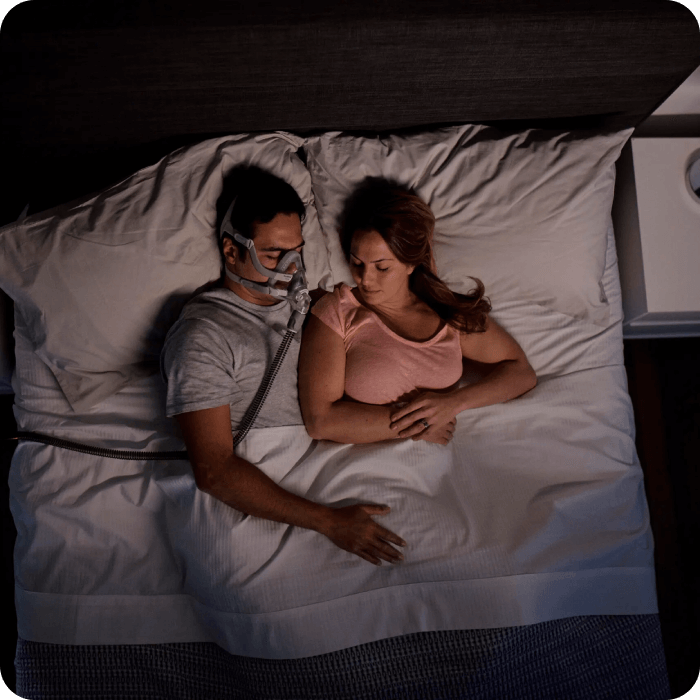
Untreated sleep apnea is associated with an increased risk of heart disease and stroke.5
Sleep disordered breathing is present in more than 30% of patients with hypertension,6 and in around 80% of patients with drug resistant hypertension.7
For this group of patients in particular, treatment with positive airway pressure therapy may be especially important.8 Research also suggests that up to 50% of patients with OSA have type 2 diabetes. 9,10
If you are diagnosed, help is available.
Do you recognise these signs?
Loud snoring
Dry mouth on waking
Morning headaches
Poor concentration
Restless sleep
Waking breathless
Frequent waking to urinate
Feeling unusually sleepy during the day.
If these signs sound familiar, it may be time to get assessed.
A healthcare professional can assess your symptoms and, if needed, recommend a sleep study to find out whether you have sleep apnea and how severe it is. This assessment screens for possible risk and does not provide a medical diagnosis.
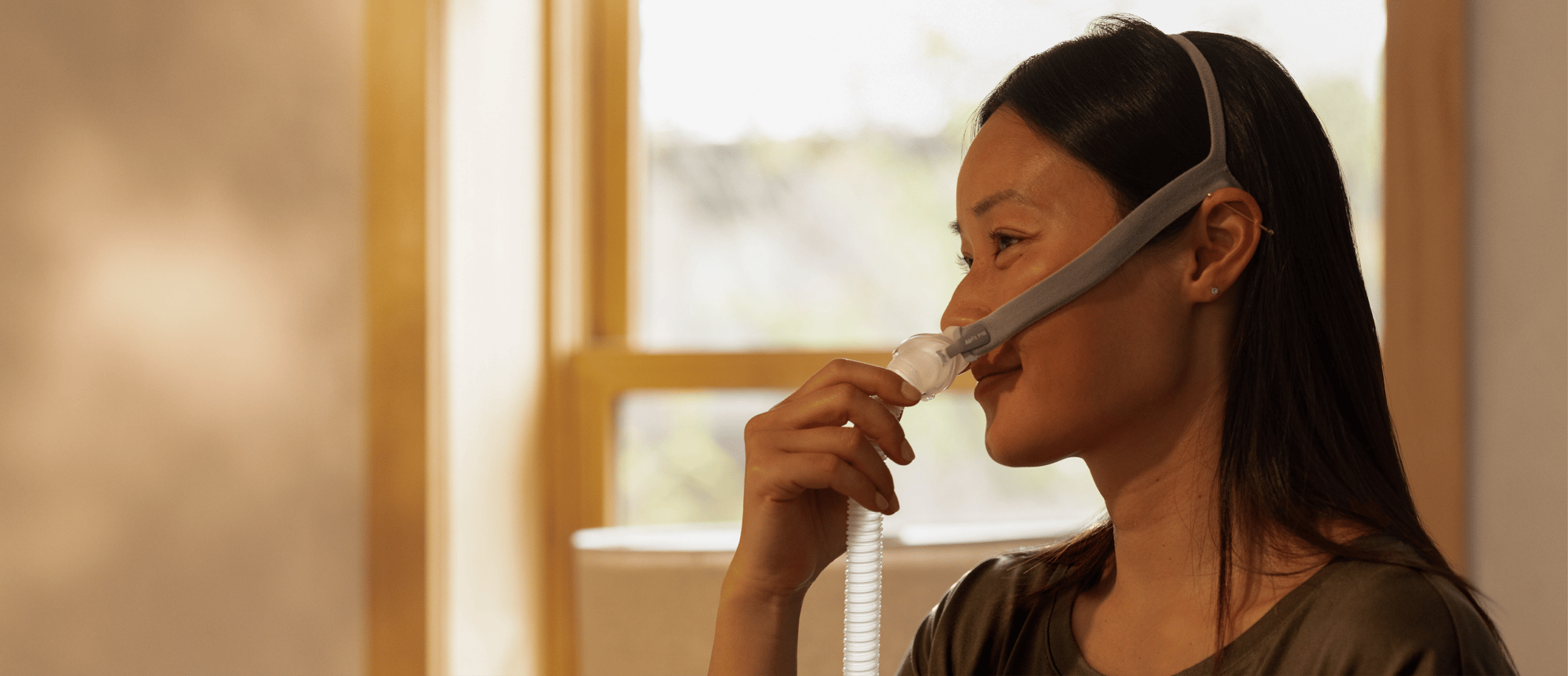
Do you recognise these signs?
Loud snoring
Dry mouth on waking
Morning headaches
Poor concentration
Restless sleep
Waking breathless
Frequent waking to urinate
Unusual daytime sleeping
If these signs sound familiar, it may be time to get assessed.
A healthcare professional can assess your symptoms and, if needed, recommend a sleep study to find out whether you have sleep apnea and how severe it is. This assessment screens for possible risk and does not provide a medical diagnosis.
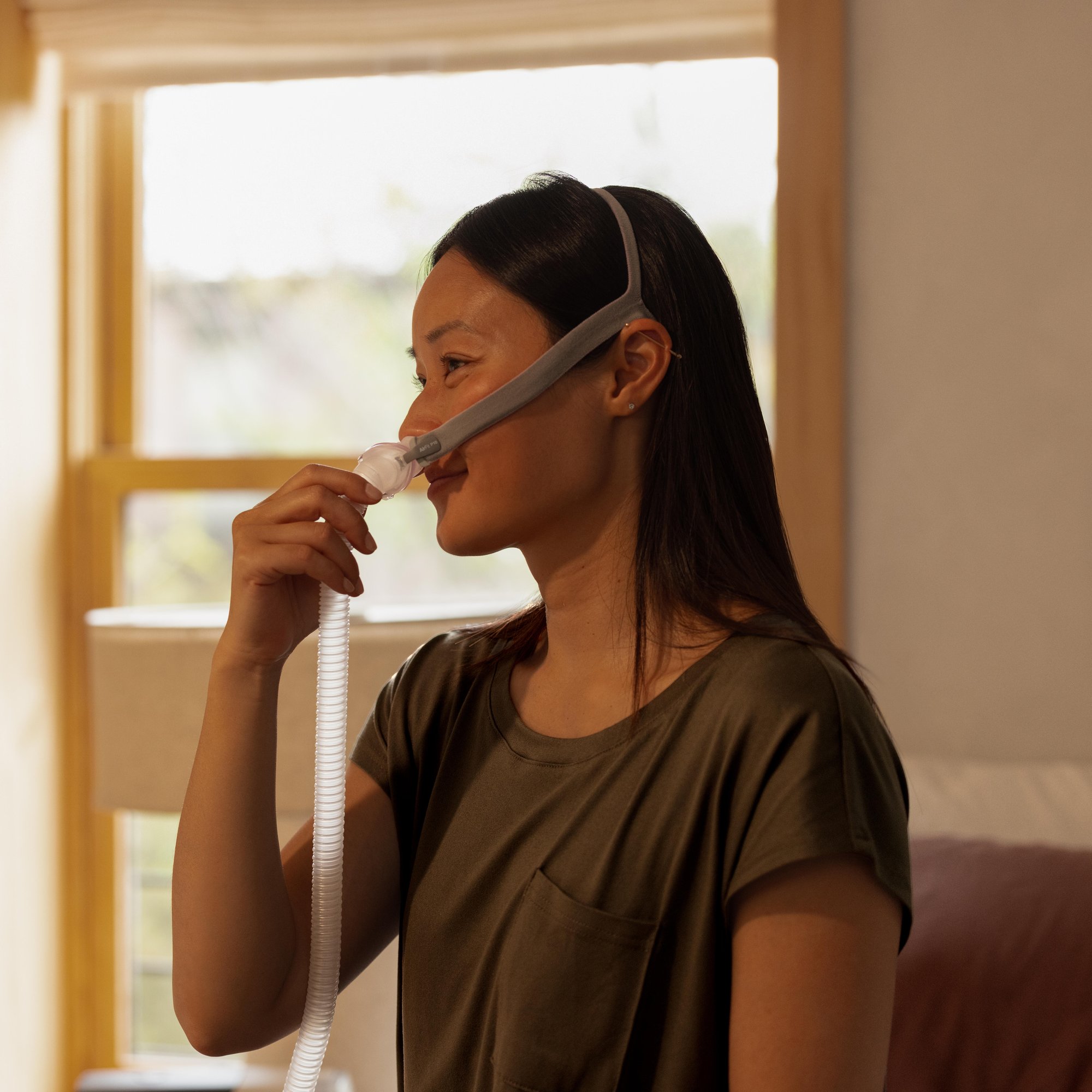
PAP therapy can now be subsidised in Singapore
Who may be eligible?
Subsidy is available for Singaporean citizens receiving outpatient treatment in apublic healthcare institution. If your doctor prescribes the Resmed AirSense 10 AutoSet model for you, and you meet the subsidy criteria, you are eligible for a one time subsidy and the cost of the PAP device will be subsidised by 30% to 70%.^
- Aged 16 years and above
- Have moderate-to-severe OSA confirmed by a specialist
- Successful completion of a one-month APAP or CPAP trial with use of at least 4 hours per night on 70% of nights
^This information is for general guidance only. Individual subsidy eligibility will be determined through the appropriate clinical and subsidy assessment process.
Need more information about the Singapore PAP device subsidy eligibility?
The Sleep Apnea Journey
Step 1: Notice the signs
Step 2: Get diagnosed
Step 3: Start treatment if recommended.
Step 4: Continue treatment
What should you do next?
Learn about sleep apnea, PAP therapy, and treatment options, then speak to a qualified healthcare professional for advice on diagnosis, treatment and subsidy eligibility.

Frequently Asked Questions
What is obstructive sleep apnea?
Obstructive sleep apnea (OSA) occurs when the airway becomes partially or fully blocked during sleep, causing repeated pauses in breathing.
When should I get checked?
Consider an assessment if you snore loudly, wake choking or gasping, feel unrefreshed in the morning, or experience excessive daytime tiredness.
How is it diagnosed in Singapore?
A healthcare professional may recommend a clinical review and, where appropriate, a sleep study.
Can PAP therapy be subsidised in Singapore?
Yes. Eligible patients with moderate-to-severe OSA may receive subsidies for selected PAP devices through the public healthcare pathway, subject to prevailing criteria.
Does everyone with sleep apnea need PAP therapy?
No. Treatment depends on the diagnosis, severity, symptoms, and your doctor's assessment. PAP therapy is one possible treatment option.
Can I buy a PAP device directly?
Please speak to a qualified healthcare professional first. Device selection, treatment suitability, and subsidy eligibility should be guided by professional assessment. You may also connect with us on WhatsApp or reach out to any of our Resmed authorized distributors to find out more
References
Benjafield AV, Ayas NT, Eastwood PR, Heinzer R, Ip MSM, Morrell MJ, Nunez CM, Patel SR, Penzel T, Pépin JL, Peppard PE, Sinha S, Tufik S, Valentine K, Malhotra A. Estimation of the global prevalence and burden of obstructive sleep apnoea: a literature-based analysis. Lancet Respir Med. 2019 Aug;7(8):687-698. doi: 10.1016/S2213-2600(19)30198-5. Epub 2019 Jul 9. PMID: 31300334; PMCID: PMC7007763.
Tan, A., Cheung, Y. Y., Yin, J., Lim, W. -Y., Tan, L. W. L., and Lee, C. -H. (2016), Prevalence of sleep-disordered breathing in a multiethnic Asian population in Singapore: A community based study. Respirology, 21: 943–950. doi: 10.1111/resp.12747.
Sleep apnoea notifications are available on Apple Watch Series 9 and later, Apple Watch Ultra 2 and later and Apple Watch SE 3 in Singapore. The feature is intended to detect signs of moderate to severe sleep apnoea for people 18 years old or older without a diagnosis of sleep apnoea.
Samsung’s Sleep Apnea feature is intended for users aged 22+ who have not been previously diagnosed with sleep apnea. It is designed as a screening tool only and does not replace a medical diagnosis. Available on Galaxy Watch4 and newer, paired. Do refer to Samsung Singapore for latest list of compatible models
Bonsignore, Maria R., et al. ˝Obstructive Sleep Apnea and Comorbidities: A Dangerous Liaison.˛ Multidisciplinary Respiratory Medicine, vol. 14, article 8, 14 Feb. 2019, https://doi.org/10.1186/s40248-019-
Logan AG, Perlikowski SM et al. J Hypertens. 2001
Marin JM et al. JAMA. 2012
Montesi et al. Journal of Clinical Sleep Medicine. 2012
Reutrakul S, Mokhlesi B. Obstructive Sleep Apnea and Diabetes: A State of the Art Review. Chest. 2017;152(5):1070–1086.
Foster GD, et al. Diabetes Care. 2009;32(6):1017–1019.
*By connecting with Resmed, you consent to being contacted via WhatsApp by our trusted third-party partner to assist you.
This page is for general educational purposes only and does not replace professional medical advice, diagnosis, or treatment. Please consult a qualified healthcare professional for advice on assessment, treatment options, prescriptions, and subsidy eligibility. Any clinical recommendation or financing outcome depends on individual assessment and prevailing healthcare rules in Singapore.